PUBLISH DATE:
READ TIME:
6 MIN
The Sanctuary Architecture
The Sanctuary Architecture
The Sanctuary Architecture
Sleep is not an activity; it is a destination. A case study on transforming a master bedroom from a multi-purpose entertainment center into a dedicated biophysical recovery chamber.
Sleep is not an activity; it is a destination. A case study on transforming a master bedroom from a multi-purpose entertainment center into a dedicated biophysical recovery chamber.
Sleep is not an activity; it is a destination. A case study on transforming a master bedroom from a multi-purpose entertainment center into a dedicated biophysical recovery chamber.
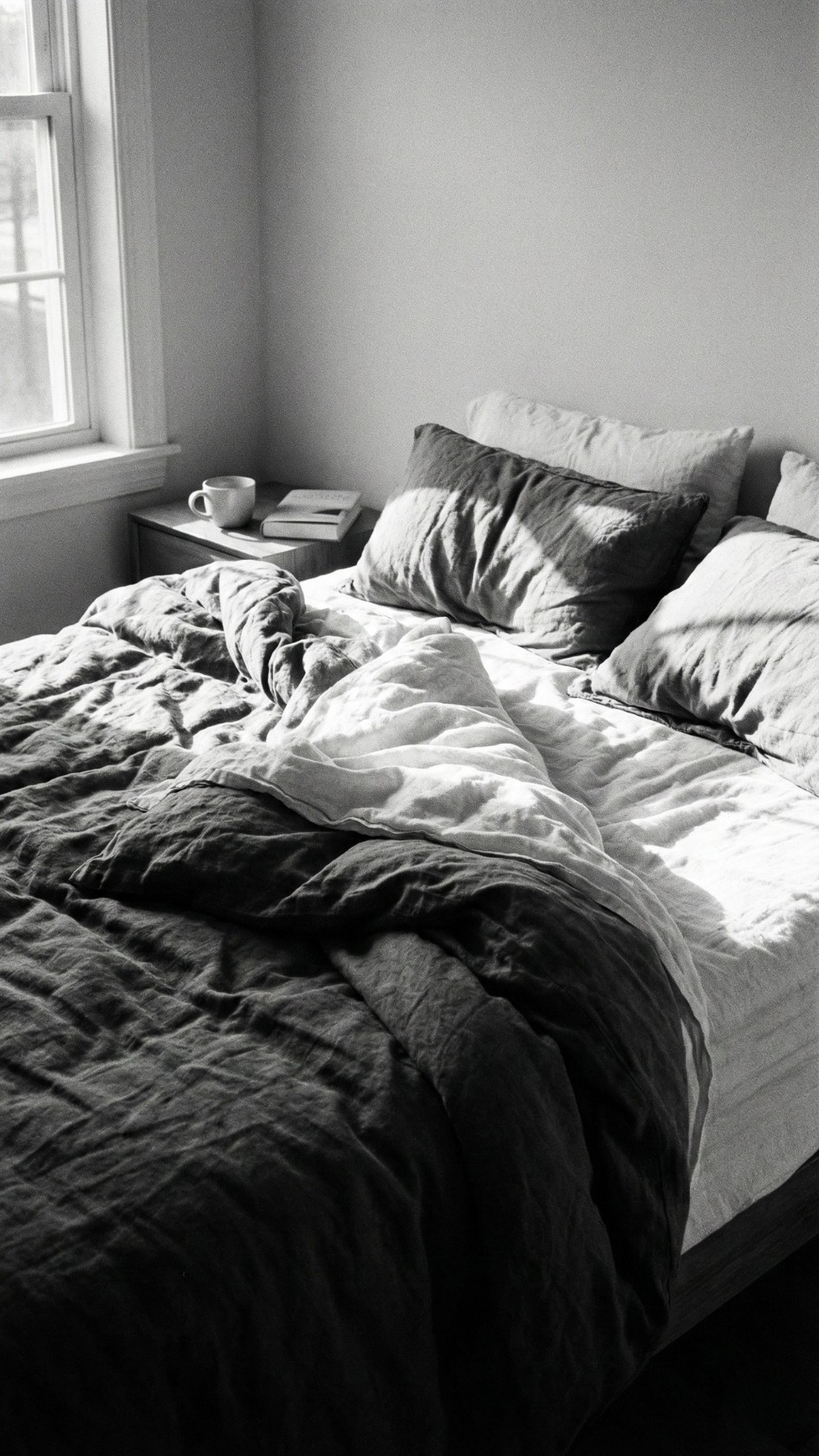
The recovery chamber must remain distinct from the living space.
The Multi-Purpose Trap
We recently worked with a high-performance executive who claimed to have "chronic insomnia." Her biometrics showed high sleep latency (time to fall asleep) and fractured REM cycles.
The issue was not biological; it was architectural. Her bedroom served as a cinema (TV on the wall), an office (laptop on the duvet), and a gym (Peloton in the corner).
To the nervous system, this room signals "activity," "entertainment," and "stress." Expecting the brain to suddenly switch to "deep safety" amidst these cues is mechanically impossible.
The Single-Use Rule
We executed a ruthless audit based on the "Single-Use Rule." If an object is not related to sleep, intimacy, or dressing, it is evicted.
1. The Screen Ban: The television was removed. Blue light suppresses melatonin, but even the presence of a black screen signals potential input.
2. The Kinetic Separation: The exercise bike was moved to the garage. You cannot recover in the same space where you stress the body.
3. The Thermal Shift: We installed blackout shades and lowered the ambient temperature to 18°C (65°F), the optimal thermal window for deep sleep.
The Result
Within 14 days, sleep latency dropped from 45 minutes to 8 minutes. The client did not take new supplements or meditate. She simply allowed the environment to do the heavy lifting.
A sanctuary is defined by what is excluded from it. If your bedroom is everything, it is nothing.
The Multi-Purpose Trap
We recently worked with a high-performance executive who claimed to have "chronic insomnia." Her biometrics showed high sleep latency (time to fall asleep) and fractured REM cycles.
The issue was not biological; it was architectural. Her bedroom served as a cinema (TV on the wall), an office (laptop on the duvet), and a gym (Peloton in the corner).
To the nervous system, this room signals "activity," "entertainment," and "stress." Expecting the brain to suddenly switch to "deep safety" amidst these cues is mechanically impossible.
The Single-Use Rule
We executed a ruthless audit based on the "Single-Use Rule." If an object is not related to sleep, intimacy, or dressing, it is evicted.
1. The Screen Ban: The television was removed. Blue light suppresses melatonin, but even the presence of a black screen signals potential input.
2. The Kinetic Separation: The exercise bike was moved to the garage. You cannot recover in the same space where you stress the body.
3. The Thermal Shift: We installed blackout shades and lowered the ambient temperature to 18°C (65°F), the optimal thermal window for deep sleep.
The Result
Within 14 days, sleep latency dropped from 45 minutes to 8 minutes. The client did not take new supplements or meditate. She simply allowed the environment to do the heavy lifting.
A sanctuary is defined by what is excluded from it. If your bedroom is everything, it is nothing.
The Multi-Purpose Trap
We recently worked with a high-performance executive who claimed to have "chronic insomnia." Her biometrics showed high sleep latency (time to fall asleep) and fractured REM cycles.
The issue was not biological; it was architectural. Her bedroom served as a cinema (TV on the wall), an office (laptop on the duvet), and a gym (Peloton in the corner).
To the nervous system, this room signals "activity," "entertainment," and "stress." Expecting the brain to suddenly switch to "deep safety" amidst these cues is mechanically impossible.
The Single-Use Rule
We executed a ruthless audit based on the "Single-Use Rule." If an object is not related to sleep, intimacy, or dressing, it is evicted.
1. The Screen Ban: The television was removed. Blue light suppresses melatonin, but even the presence of a black screen signals potential input.
2. The Kinetic Separation: The exercise bike was moved to the garage. You cannot recover in the same space where you stress the body.
3. The Thermal Shift: We installed blackout shades and lowered the ambient temperature to 18°C (65°F), the optimal thermal window for deep sleep.
The Result
Within 14 days, sleep latency dropped from 45 minutes to 8 minutes. The client did not take new supplements or meditate. She simply allowed the environment to do the heavy lifting.
A sanctuary is defined by what is excluded from it. If your bedroom is everything, it is nothing.