PUBLISH DATE:
READ TIME:
10 MIN
Architecture of the Nervous System
Architecture of the Nervous System
Architecture of the Nervous System
Your mind is not contained within your skull; it extends into your physical environment. An audit of how spatial geometry, light, and clutter dictate your background cortisol levels.
Your mind is not contained within your skull; it extends into your physical environment. An audit of how spatial geometry, light, and clutter dictate your background cortisol levels.
Your mind is not contained within your skull; it extends into your physical environment. An audit of how spatial geometry, light, and clutter dictate your background cortisol levels.
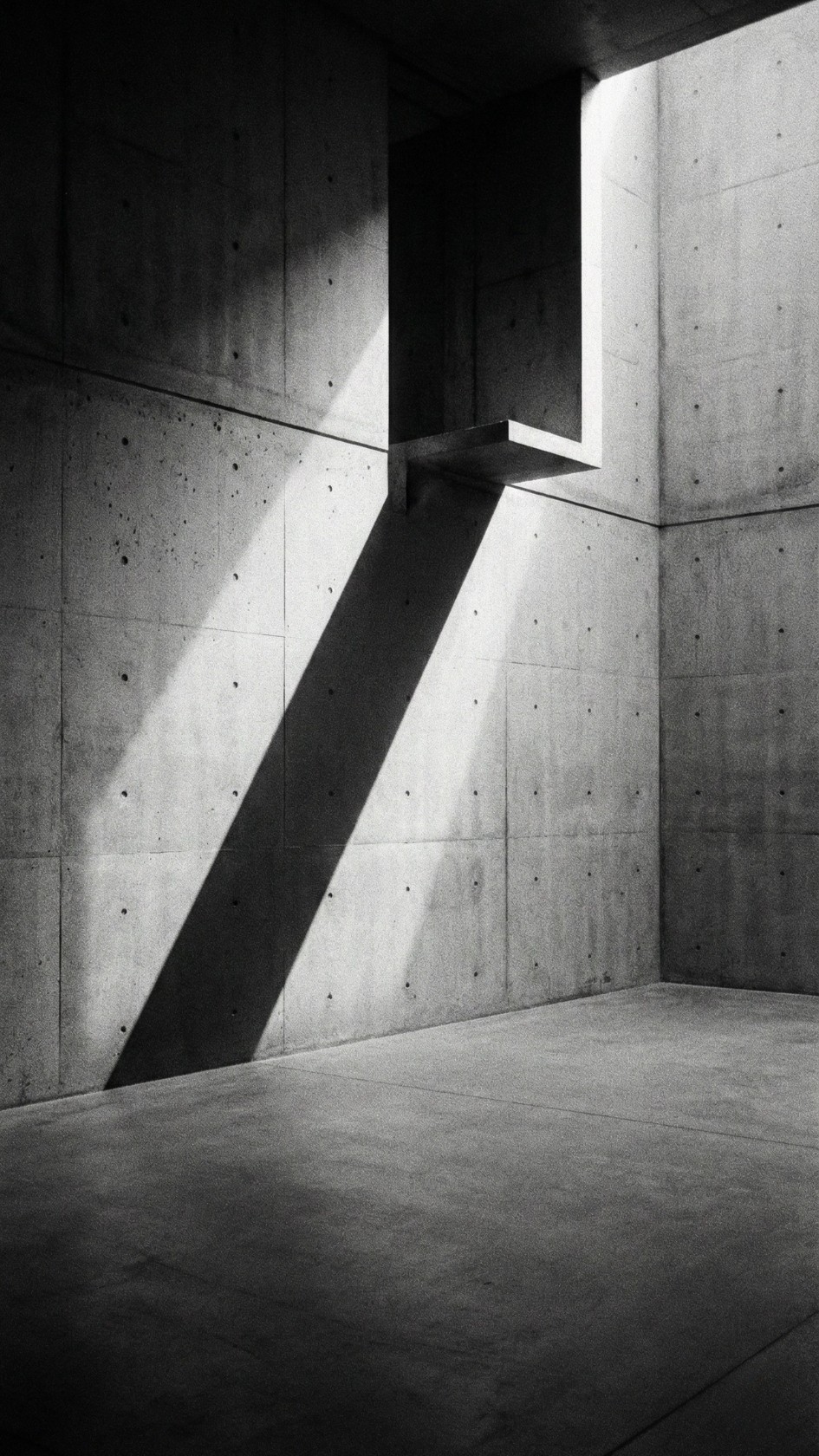
Spatial geometry acting as an external nervous system.
The Theory of Extended Cognition
There is a pervasive illusion that thinking happens exclusively inside the brain. The theory of extended cognition argues otherwise: that we offload cognitive processing onto our environment. We use notebooks to store memory, tools to extend our physical capabilities, and physical spaces to regulate our emotional states.
If your environment is an extension of your mind, then a disorganized environment is a disorganized mind.
Your home is not just a container for your possessions; it is an external nervous system. Every object, every sightline, and every lighting choice is a continuous stream of data being processed by your brain's background operating system.
The Somatic Audit of Clutter
When you walk into a cluttered room, you may consciously ignore the stack of mail on the table or the tangled charging cables. Your subconscious, however, does not.
To the ancient parts of the human brain—specifically the amygdala, responsible for threat detection—clutter registers as "visual noise." It is undefined data that must be scanned and categorized to ensure it isn't a threat.
This background scanning requires energy. Living in a high-friction environment creates a "cognitive tax," a persistent, low-level drain on your executive function. You find yourself exhausted not by the work you did, but by the energy required to ignore your own space.
Designing for Biophysical Safety
To architect clarity, we must design spaces that signal safety to the biology. When the environment signals safety, the parasympathetic nervous system engages, lowering heart rate variability and allowing for high-level creative thought.
A Skybloom environmental audit focuses on three primary inputs:
1. The Visual Horizon: The eye seeks open space. Ensure that your primary sightlines—from your desk, your bed, your sofa—are terminated by simplicity, not complexity. A blank wall is better than a crowded bookshelf.
2. The Light Temperature: Lighting is a biological signal, not decoration. Cool, overhead light signals "mid-day/alertness." Warm, low-level light signals "dusk/safety." Using the wrong signal at the wrong time causes circadian disruption.
3. The Tactile Anchor: In a digital world, the body craves analogue grounding. Incorporating raw materials—unpolished stone, heavy wood, linen—provides necessary somatic feedback that grounds us in physical reality.
We do not decorate. We engineer the environment to lower the friction of existence.
The Theory of Extended Cognition
There is a pervasive illusion that thinking happens exclusively inside the brain. The theory of extended cognition argues otherwise: that we offload cognitive processing onto our environment. We use notebooks to store memory, tools to extend our physical capabilities, and physical spaces to regulate our emotional states.
If your environment is an extension of your mind, then a disorganized environment is a disorganized mind.
Your home is not just a container for your possessions; it is an external nervous system. Every object, every sightline, and every lighting choice is a continuous stream of data being processed by your brain's background operating system.
The Somatic Audit of Clutter
When you walk into a cluttered room, you may consciously ignore the stack of mail on the table or the tangled charging cables. Your subconscious, however, does not.
To the ancient parts of the human brain—specifically the amygdala, responsible for threat detection—clutter registers as "visual noise." It is undefined data that must be scanned and categorized to ensure it isn't a threat.
This background scanning requires energy. Living in a high-friction environment creates a "cognitive tax," a persistent, low-level drain on your executive function. You find yourself exhausted not by the work you did, but by the energy required to ignore your own space.
Designing for Biophysical Safety
To architect clarity, we must design spaces that signal safety to the biology. When the environment signals safety, the parasympathetic nervous system engages, lowering heart rate variability and allowing for high-level creative thought.
A Skybloom environmental audit focuses on three primary inputs:
1. The Visual Horizon: The eye seeks open space. Ensure that your primary sightlines—from your desk, your bed, your sofa—are terminated by simplicity, not complexity. A blank wall is better than a crowded bookshelf.
2. The Light Temperature: Lighting is a biological signal, not decoration. Cool, overhead light signals "mid-day/alertness." Warm, low-level light signals "dusk/safety." Using the wrong signal at the wrong time causes circadian disruption.
3. The Tactile Anchor: In a digital world, the body craves analogue grounding. Incorporating raw materials—unpolished stone, heavy wood, linen—provides necessary somatic feedback that grounds us in physical reality.
We do not decorate. We engineer the environment to lower the friction of existence.
The Theory of Extended Cognition
There is a pervasive illusion that thinking happens exclusively inside the brain. The theory of extended cognition argues otherwise: that we offload cognitive processing onto our environment. We use notebooks to store memory, tools to extend our physical capabilities, and physical spaces to regulate our emotional states.
If your environment is an extension of your mind, then a disorganized environment is a disorganized mind.
Your home is not just a container for your possessions; it is an external nervous system. Every object, every sightline, and every lighting choice is a continuous stream of data being processed by your brain's background operating system.
The Somatic Audit of Clutter
When you walk into a cluttered room, you may consciously ignore the stack of mail on the table or the tangled charging cables. Your subconscious, however, does not.
To the ancient parts of the human brain—specifically the amygdala, responsible for threat detection—clutter registers as "visual noise." It is undefined data that must be scanned and categorized to ensure it isn't a threat.
This background scanning requires energy. Living in a high-friction environment creates a "cognitive tax," a persistent, low-level drain on your executive function. You find yourself exhausted not by the work you did, but by the energy required to ignore your own space.
Designing for Biophysical Safety
To architect clarity, we must design spaces that signal safety to the biology. When the environment signals safety, the parasympathetic nervous system engages, lowering heart rate variability and allowing for high-level creative thought.
A Skybloom environmental audit focuses on three primary inputs:
1. The Visual Horizon: The eye seeks open space. Ensure that your primary sightlines—from your desk, your bed, your sofa—are terminated by simplicity, not complexity. A blank wall is better than a crowded bookshelf.
2. The Light Temperature: Lighting is a biological signal, not decoration. Cool, overhead light signals "mid-day/alertness." Warm, low-level light signals "dusk/safety." Using the wrong signal at the wrong time causes circadian disruption.
3. The Tactile Anchor: In a digital world, the body craves analogue grounding. Incorporating raw materials—unpolished stone, heavy wood, linen—provides necessary somatic feedback that grounds us in physical reality.
We do not decorate. We engineer the environment to lower the friction of existence.